Do You Actually Need Your Groceries in 30 Minutes? Let's Talk About That

Let's be honest: the ability to have groceries at your door within the hour is kind of miraculous. Ten years ago, that would have sounded like science fiction. Today, it's a Tuesday afternoon. We've normalized something genuinely extraordinary, and there's real value in that convenience for plenty of situations.
But here's a question worth sitting with: how often do you actually need groceries in 30 minutes, versus how often does the option just make you feel better about not planning ahead?
That's not a judgment — it's a genuine question that researchers, nutritionists, and consumer behavior experts have started asking out loud. And the answers are more interesting than you might expect.
The Psychology of Instant Gratification in Grocery Shopping
We live in an on-demand culture, and grocery delivery has followed the same arc as everything else: the faster, the better. App stores are full of services competing on speed, with "ultra-fast" delivery windows now measured in minutes rather than hours.
But speed, when it becomes the primary value proposition of how we feed ourselves, starts to create some unexpected friction downstream. Researchers at Cornell's Food and Brand Lab have found that unplanned grocery shopping — whether in-store or through rapid delivery apps — correlates with higher rates of food waste, less nutritional variety in meals, and greater overall food spending compared to households that plan their meals even loosely in advance.
The mechanism makes sense when you think about it. When you're ordering in a hurry, you're reacting to immediate hunger or a sudden gap in your fridge. You're not thinking about what you already have, what you'll need for the rest of the week, or how the items you're buying fit into a larger meal plan. You're just plugging a hole.
What the Research Actually Says
A 2021 study published in Resources, Conservation and Recycling found a direct correlation between higher-frequency, unplanned grocery trips and increased household food waste. The logic tracks: when you shop reactively, you're more likely to duplicate items you already have, buy perishables without a specific plan for them, and underestimate how long certain ingredients will last.
Meanwhile, households that used scheduled delivery windows — even just 24 to 48 hours out — reported more deliberate purchasing decisions. They had time to check their pantry, build a loose meal plan, and order with intention rather than impulse.
There's also a financial dimension. Same-day and ultra-fast delivery services typically carry premium pricing, higher service fees, and tip expectations that can add 20–30% to the base cost of your order compared to standard scheduled delivery. Over the course of a month, that premium adds up in ways most people don't consciously track.
The Case for Slowing Down (Just a Little)
None of this is an argument against delivery convenience — it's an argument for being thoughtful about which kind of convenience actually serves you.
Planning your grocery order a day or two in advance, even loosely, gives you a few things that instant delivery can't:
Better meal coherence. When you sit down for even 10 minutes to think about what you're cooking this week, you naturally start connecting ingredients across meals. That bunch of cilantro gets used in Tuesday's tacos and Thursday's soup, instead of wilting in the crisper because you only needed it for one thing.
Less food waste. According to the USDA, the average American household throws away between $1,500 and $2,000 worth of food every year. Meal planning — even loosely — is one of the most effective interventions. It's not glamorous, but it works.
More intentional discovery. When you're not in crisis mode trying to fill an immediate need, you have mental space to explore. You might notice a locally-produced ingredient you haven't tried, or a regional brand you've been curious about. That kind of discovery is genuinely fun, and it's hard to access when you're just trying to get dinner sorted in the next 20 minutes.
Where Local Markets Fit Into This
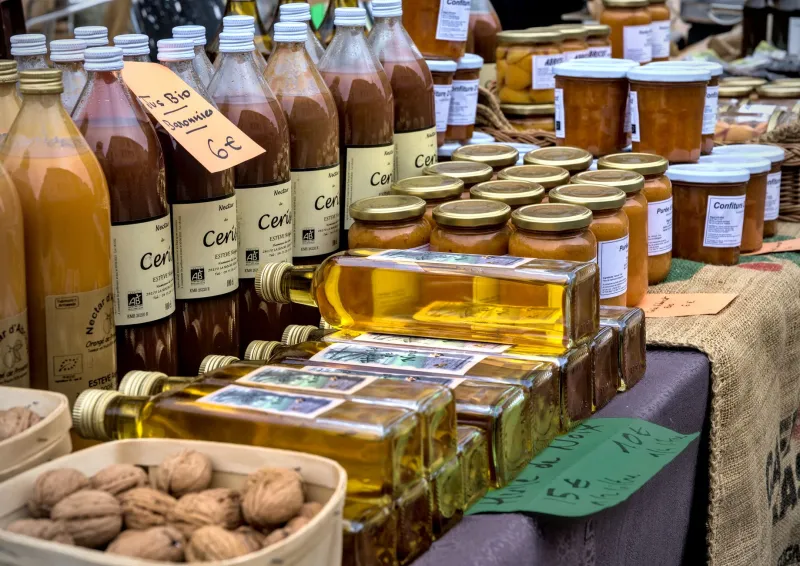
One of the things we've noticed at Stop & Shop JO is that customers who approach shopping as a slightly more deliberate, planned activity tend to engage more deeply with the local and regional products we carry. They're not just filling a cart — they're building a week of meals.
That's a different relationship with food shopping, and it tends to produce better outcomes: more variety, less waste, and a stronger sense of connection to where your food comes from and who produced it.
Local and regional products also tend to be better suited to planned shopping anyway. Small-batch producers often have variable stock, seasonal offerings, and the kind of unique ingredients that reward a little forethought. If you know you want to try that locally-made harissa paste in your roasted chicken on Wednesday, you order it Monday. That's not a burden — it's just how thoughtful cooking works.
A Balanced Take
Here's the honest version of this argument: instant delivery is great for genuine emergencies and for households where unpredictability is unavoidable. Sick kid, unexpected guests, a recipe that went sideways — yes, having a 30-minute option is legitimately useful.
But when ultra-fast delivery becomes the default mode of grocery shopping rather than the exception, it starts working against some of the things most of us actually care about: eating well, wasting less, spending sensibly, and feeling connected to our food.
The sweet spot for most households is probably a combination: a regular planned order for the week's staples, with the occasional same-day top-up when life genuinely requires it. That approach captures the real convenience of modern delivery without surrendering the benefits of a little intentionality.
Your Groceries, Your Pace
Speed is a feature, not a virtue. The fastest option isn't automatically the best one — especially when it comes to something as foundational as how you feed yourself and your family.
Slowing down just slightly, building a loose plan, and shopping with a bit more purpose isn't a step backward. It's actually one of the more effective things you can do for your meal quality, your food budget, and your connection to the local producers and products that make your food worth caring about in the first place.
Sometimes the best delivery window is the one that gives you a little time to think.