The Regional Brands You've Never Heard Of — And Why That's About to Change
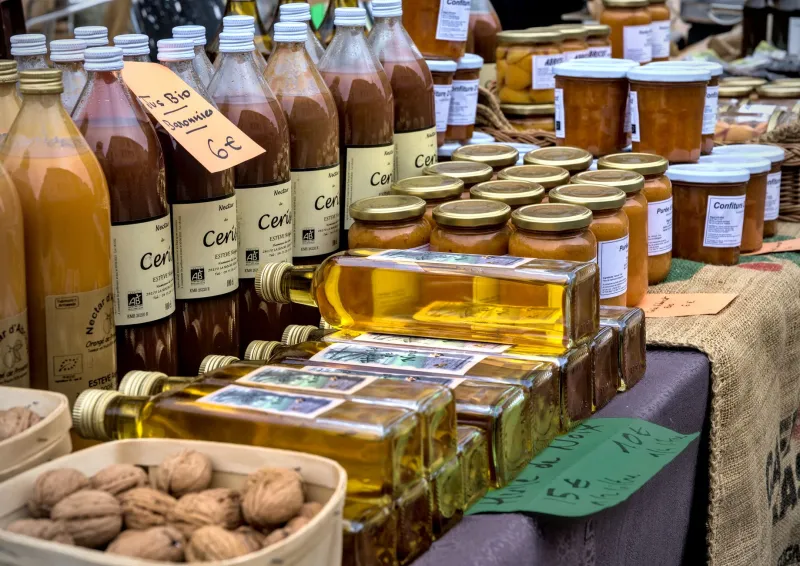
Ask anyone who grew up in the Mid-Atlantic about Berger Cookies, or a Texan about Big Red soda, or a New Englander about Moxie, and you'll get a reaction that goes way beyond food. Regional brands carry something that no national corporation can manufacture: genuine local identity. They taste like somewhere specific. They feel like home.
But for every beloved regional staple that survived, dozens of others quietly vanished — not because people stopped loving them, but because the economics of national retail distribution made it nearly impossible for small producers to compete for shelf space.
That story, thankfully, is starting to shift.
How National Chains Squeezed Out the Little Guys
The mechanics of big retail shelf placement are brutal for small producers. To get your product onto the shelves of a major national grocery chain, you typically need to pay what's called a "slotting fee" — essentially a cash payment to the retailer just for the privilege of having your product stocked. These fees can run into the tens of thousands of dollars per SKU, per store. For a small-batch hot sauce maker in New Mexico or a family-run pickle company in Ohio, that math simply doesn't work.
And even if a small brand manages to get placement, they're then competing for visibility against products backed by massive marketing budgets. The national brands can afford eye-level shelf positioning, promotional displays, and coupon inserts. The little guys often can't.
The result? Generations of genuinely excellent regional products got pushed out — not because consumers rejected them, but because the distribution system made them invisible.
A New Kind of Shelf Space
Here's where the story gets hopeful. Hyperlocal e-commerce platforms — the kind that specialize in connecting consumers with regional and locally-sourced products — have effectively created a new kind of shelf space, one where the rules are fundamentally different.
There are no slotting fees. There's no battle for physical positioning. A small-batch producer in the Midwest can reach customers across the country, or serve their own regional community at scale, without needing a national distribution deal or a $50,000 marketing budget. The product just needs to be good — and the right platform needs to care enough to surface it.
At Stop & Shop JO, that's exactly the philosophy behind how we approach product discovery. We're not filling shelves with whatever pays to be there. We're actively looking for the kinds of authentic, regional products that deserve more attention than traditional retail ever gave them.
The Founders Who Refused to Quit
Take the kind of story you hear over and over in this space: a third-generation family recipe that became a local legend, then nearly disappeared when the family's small grocery distributor got bought out by a larger company. The product got dropped. The family kept making it — but only selling at farmers markets and out of their garage.
Then a local online marketplace picked it up. Within months, they were shipping across state lines. The founder, in conversations like these, often says something along the lines of: "We never stopped believing in the product. We just needed someone to help people find us."
That sentiment — we just needed someone to help people find us — is the emotional core of what hyperlocal e-commerce does for forgotten regional brands. It's not charity. It's discovery infrastructure.
And the consumer demand is absolutely there. A 2022 survey by the Specialty Food Association found that 67% of American consumers said they actively seek out local or regional food products when given the option. The appetite for authentic, place-specific products has never been higher. The problem was always access, not desire.
What "Authentic" Actually Means in 2024
There's a version of "local" and "artisan" that's been co-opted by big brands — the rustic fonts, the mason jar packaging, the vague farm imagery on products manufactured in industrial facilities. Consumers are increasingly good at spotting the difference.
Real regional authenticity is specific. It's a barbecue sauce made with a particular regional pepper variety. It's a bread recipe that uses locally-milled flour and has been in someone's family for four generations. It's a hot sauce that tastes like the specific culinary culture of the city where it was born.
That specificity is what hyperlocal platforms are uniquely positioned to protect and promote. When you're curating a marketplace around genuine regional products, you're not just selling food — you're preserving food culture. You're keeping flavor traditions alive that would otherwise get steamrolled by the homogenizing force of national retail.
The Ripple Effect on Local Economies
This isn't just about nostalgia or novelty. When regional food brands thrive, they create real economic value in their communities. They source ingredients locally. They employ local workers. They keep money circulating within regional economies rather than funneling profits to distant corporate headquarters.
Studies consistently show that locally-owned businesses recirculate a significantly higher percentage of revenue within their local economies compared to national chains. For food producers specifically, that means stronger relationships with local farmers, more stable employment in food manufacturing, and a more resilient regional food system overall.
Every time someone chooses a regional brand through a local marketplace, they're participating in that economic ecosystem — often without even realizing it.
Finding What Was Almost Lost
One of the most genuinely exciting things about the current moment in food retail is that so many of these nearly-lost regional brands are findable again. Not just at farmers markets on Saturday mornings, but online, on-demand, delivered to your door.
The brands that survived by sheer stubbornness — making their product anyway, selling wherever they could, refusing to let the recipe die — are finally getting the audience they always deserved. And the platforms that are serious about local, authentic food discovery are the ones making that happen.
Next time you're browsing for something new to try, consider looking past the household names. The most interesting flavors in American food culture have always been hiding in the regional stuff. They're just easier to find now.