Why Knowing the Maker Changes Everything About Buying the Product
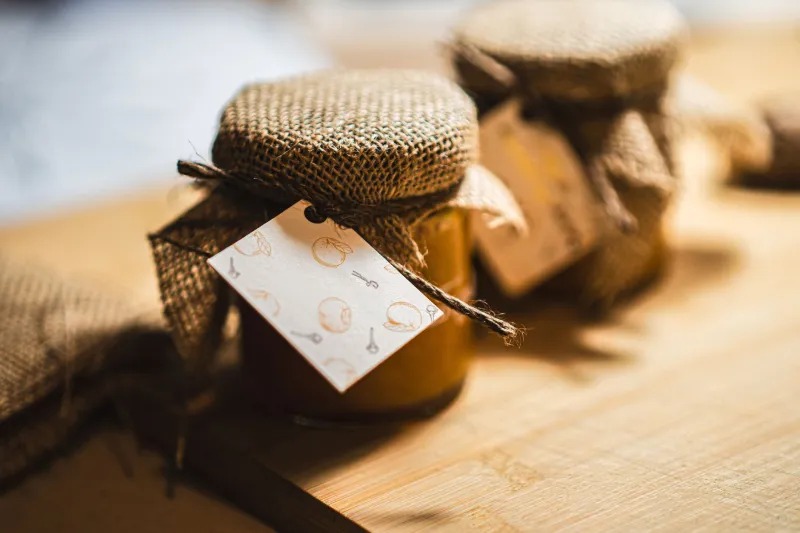
Picture two jars of honey sitting side by side. Same size, similar price, both labeled as "raw and unfiltered." One is from a brand you've never heard of, with a generic label and no information beyond a 1-800 number on the back. The other has a photo of a beekeeper named Marcus, a short paragraph about his farm in rural Tennessee, and a note about which wildflowers his bees prefer this time of year.
Which one do you buy?
If you're like most people, it's not even a close call. You buy Marcus's honey. And the interesting question isn't just why—it's what that preference tells us about how trust actually functions in retail, and why local platforms are sitting on a massive structural advantage that national brands simply can't manufacture.
The Anonymity Problem in Modern Retail
For most of the last century, grocery retail was built around the erasure of origin. Products were standardized, branded, and abstracted away from whoever made them. The goal was consistency and scale—a can of soup that tasted identical whether it was purchased in Maine or Arizona, with no particular attachment to any individual or place.
This model worked remarkably well for a long time. But something has shifted. American consumers—especially those under 45—have developed a growing skepticism toward faceless corporate products and a corresponding appetite for things that feel authentic, traceable, and human.
This isn't just a vibe. It shows up in purchasing data. Studies consistently show that shoppers are willing to pay meaningfully more for products with transparent origin stories, and that they're significantly more likely to try something unfamiliar when they have context about who made it and why.
What "Accountability" Does to Risk Perception
Trying a new product is always a small act of trust. You're betting some money—and a meal, or a snack, or a gift—on the idea that this unknown thing will be worth it. The question is what information reduces that perceived risk enough to make the leap.
For national brands, the answer has traditionally been advertising and shelf placement. Familiarity substitutes for trust. You buy the cereal with the mascot you've seen a thousand times not because you've verified it's good, but because the repetition has created a kind of comfort.
Local maker profiles work differently. They create trust through accountability. When you know that Lena runs a small jam operation out of Portland, Oregon, and that she sources her fruit from three farms within 50 miles of her kitchen, you understand that her reputation is personally on the line in a way that a multinational food company's is not. If her jam is bad, there's a real person who has to answer for it—and that person cares, because it's her name and her livelihood.
That accountability is genuinely risk-reducing in a way that advertising isn't. And shoppers feel it, even when they can't articulate exactly why.
The Farmers Market Effect, Scaled
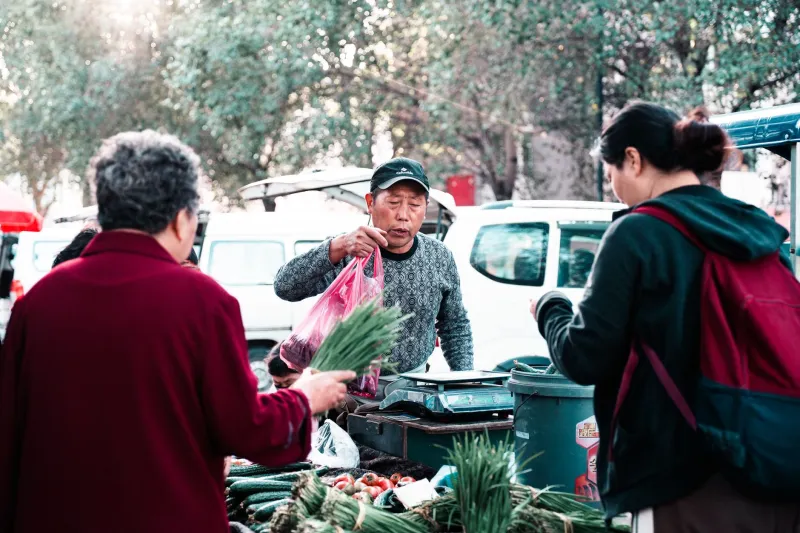
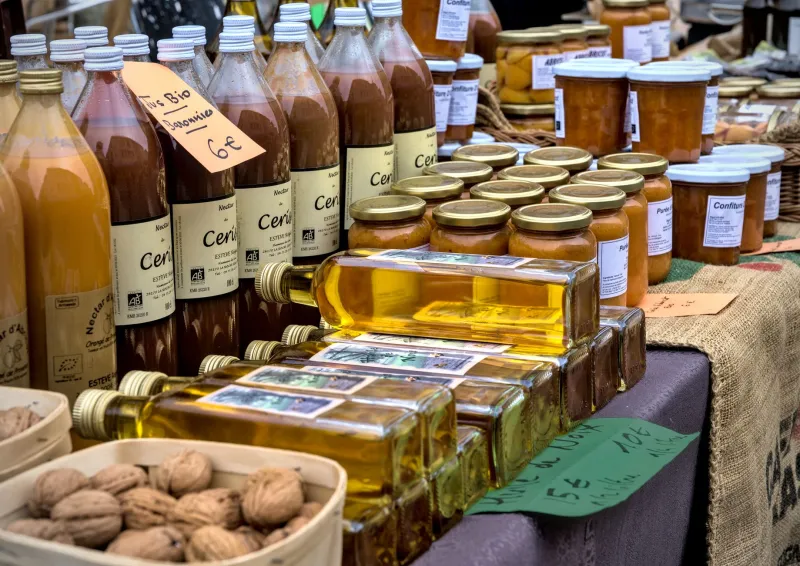
Anyone who's spent time at a good farmers market understands this phenomenon intuitively. You try things at farmers markets that you would never pick up in a grocery store—unfamiliar cheeses, unusual preserves, hot sauces with names you can't pronounce. Why? Because the maker is standing right there. You can ask questions. You can see their face. You can watch how they talk about what they made.
That directness collapses the psychological distance between producer and consumer, and with it, much of the hesitation that normally keeps people in the safe lane of familiar brands.
The challenge has always been that farmers markets don't scale. They're geographically limited, seasonally constrained, and logistically inconvenient for most people's actual lives.
Local online platforms like Stop & Shop JO are quietly solving this problem. By building producer profiles, backstories, and community context directly into the shopping experience, they're extending the farmers market effect into a format that works for daily life. You're not physically standing in front of Lena, but you know who she is, you've read her story, and you understand what she cares about. That's enough to change the math on whether you're willing to try her blackberry preserves.
Community Shopping Builds Loyalty That Advertising Can't Buy
There's a commercial dimension to this that's worth examining honestly. Local brands that successfully communicate their identity and values don't just get a first sale—they tend to get a relationship.
Customers who try a regional product through a platform where the maker has a real presence don't just evaluate the product in isolation. They evaluate it in context. If they like it, they feel good about supporting a real person. If they tell a friend about it, they have an actual story to tell—not "I bought this thing at the store" but "I found this hot sauce made by a guy who used to be a line cook in New Orleans and now runs a small batch operation out of his garage."
That kind of story travels. It creates word-of-mouth that national advertising budgets can't replicate because it's genuinely personal.
Research on community-driven commerce consistently shows that customers acquired through local platforms have higher lifetime value, higher satisfaction scores, and higher rates of voluntary referral than customers acquired through traditional retail channels. The trust premium that local makers can command isn't just emotional—it's financially real.
The Authenticity Premium Is Not a Luxury
Some people hear "authenticity premium" and assume it means local products are expensive indulgences. That's worth pushing back on. The premium isn't always monetary—and when it is, it often reflects genuine differences in how something was made, sourced, or cared for.
More importantly, the willingness to pay a bit more for something you actually understand is a rational decision, not a luxury one. You know what you're getting. You know who stands behind it. You're not gambling on a generic label.
For shoppers who've spent years buying things they don't love because they were cheap and familiar, the experience of buying something from a local maker—and having it actually be good—can be genuinely revelatory. It resets the baseline for what grocery shopping can feel like.
What This Means for How We Shop Going Forward
The shift toward maker-transparent shopping isn't a trend that's going to reverse. If anything, as consumers become more informed and more skeptical of anonymous corporate products, the demand for accountability and story is going to grow.
Platforms that invest in telling the stories of their local and regional producers aren't just doing something nice—they're building a structural advantage that gets stronger over time. Every maker profile added, every backstory told, every face attached to a product is another thread in a web of trust that national brands simply can't weave.
For shoppers, the practical takeaway is simple: next time you're browsing and you see a product with a real story behind it, give it a shot. The worst case is you don't love it. The best case is you find something you'll buy for years—and have a genuinely good story to tell about where it came from.